
If you are looking for a plant that brings late-summer color when most other flowers have faded under the heat, the Rose of Sharon is your best friend. It is a deciduous shrub, meaning it will drop its leaves in the winter and stand bare during the cold months, only to return with a burst of growth in the spring. It typically grows in an upright, vase-like shape and can reach heights of 8 to 12 feet, making it perfect for privacy hedges or as a standalone focal point in your yard. You might feel a bit nervous about cutting back such a beautiful shrub, but I can tell you from experience that these plants are remarkably tough and actually thrive when you give them a good trim.In this guide, we are going to dive deep into the art of pruning this hardy hibiscus, ensuring you have the knowledge to keep your plants vibrant for decades.
Why Pruning is Essential for Plant Health
While you can technically leave a Rose of Sharon alone and it will still grow, you will find that a lack of pruning leads to a “leggy” or messy appearance over time. When you prune, you are doing more than just shaping the plant; you are encouraging it to send its energy to the right places. By removing old, woody branches, you stimulate the growth of that “new wood” we talked about, which directly leads to more flowers. Furthermore, a dense, unpruned shrub can become a breeding ground for pests and diseases because air cannot move through the center of the plant. By thinning out the branches, you allow sunlight and fresh air to reach every part of the shrub, which keeps the leaves dry and helps prevent fungal infections.
When to Prune Rose of Sharon
The absolute best time for you to prune your Rose of Sharon is in the late winter or very early spring. You want to aim for a time when the plant is still dormant—meaning it is asleep and not actively growing—but the worst of the winter’s extreme cold has passed. In most regions, this falls between February and March, though your specific date will depend on where you live. If you prune during this time, the plant will have plenty of time to heal its wounds before the sap starts flowing and the leaves begin to emerge.
You should avoid pruning in the late spring or early summer if you can help it. Once the plant has started to grow its new branches and form flower buds, any cutting you do will remove those buds and reduce the number of flowers you get to enjoy later in the season. However, if you see a branch that is clearly dead, broken, or diseased, you can and should remove it immediately, regardless of the time of year.
| Region/Zone | Typical Pruning Month | Biological Indicator |
|---|---|---|
| Zones 5 and 6 | Late March to Early April | When the snow has mostly melted but before any green tips appear. |
| Zones 7 and 8 | February to Early March | Just as the very first spring bulbs like crocuses start to pop up. |
| Zone 9 | Late January to February | Before the heat of spring begins to push new growth. |
If you are ever unsure whether a branch is dead or just dormant, you can perform the “scratch test.” Use your thumbnail or a small knife to gently scrape a tiny bit of the bark away. If the wood underneath is green and moist, the branch is alive and well. If it is brown, dry, and brittle, that branch is dead and can be cut back to the main trunk or to the ground.
Step-by-Step: How to Prune Rose of Sharon Like a Pro
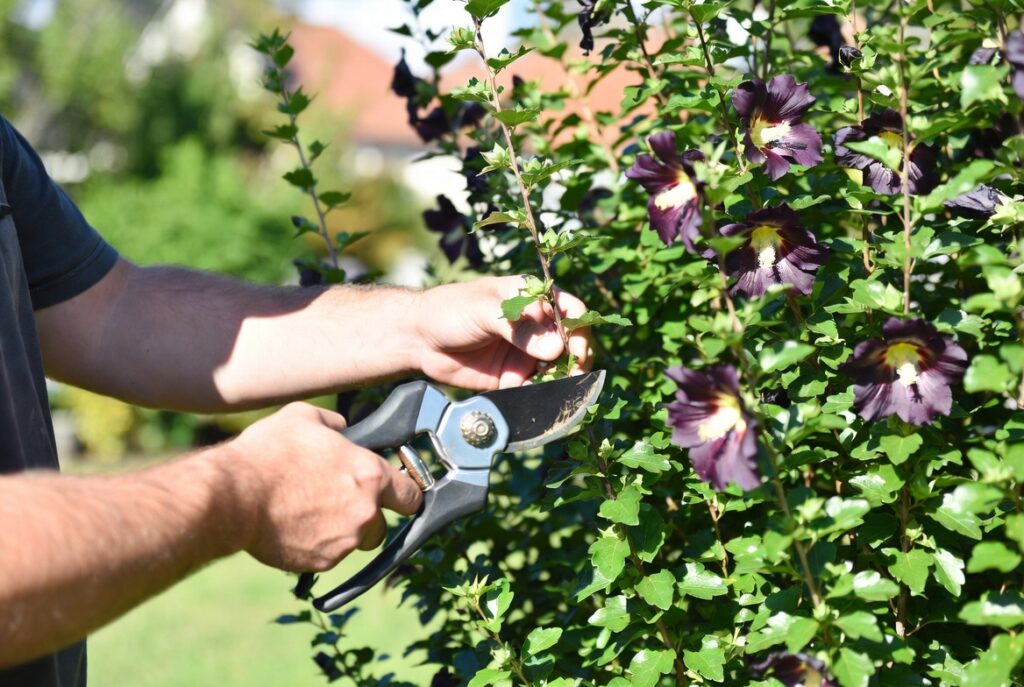
When you approach your Rose of Sharon with your pruners in hand, your first goal should be to remove the “Three Ds”: anything that is dead, damaged, or diseased. Look for branches that have been broken by winter snow or that show signs of rot. Cut these back to healthy wood or all the way to the ground if the whole branch is compromised.
Next, you want to look at the structure of the plant. Look for branches that are crossing over each other and rubbing together. This rubbing creates wounds in the bark that pests can exploit. You should choose one of the crossing branches and remove it entirely. Also, look for branches that are growing toward the center of the shrub rather than outward. Removing these “inward” branches will open up the middle of the plant to allow better airflow and light penetration.
When you make a cut, you should always do it at a 45-degree angle about a quarter-inch above a “node” or a bud. A node is that little bump on the stem where a new leaf or branch will grow. By cutting just above an outward-facing bud, you are telling the plant exactly where you want it to grow next. This helps you control the shape of the shrub and ensures that the new branches grow away from the center of the plant.
The Strategy for Bloom Size
One of the coolest things about the Rose of Sharon is that you can actually choose what kind of flowers you want. If you want a shrub that is absolutely covered in hundreds of small flowers, you should do very light pruning. Simply tip the ends of the branches to keep the plant tidy. However, if you want massive, spectacular blooms that will make your neighbors stop and stare, you should prune more heavily. By cutting the branches back by about one-third of their length, you force the plant to put all of its energy into fewer buds, resulting in significantly larger flowers.
Common Pruning Mistakes You Should Consider
Even experienced gardeners can make mistakes. One of the most common ones is “shearing” the plant horizontally across the top—often called the “flat-top” look or “crepe murder” in some regions. While this might seem like a quick way to control height, it results in a very unnatural, stiff shape and often leads to a mass of tangled, weak stems at the top of the plant. It is always better to selectively remove entire branches back to their source for a more graceful, natural vase shape.
Another mistake is leaving “stubs”. When you cut a branch in the middle of a stem without a bud nearby, that leftover wood will rot and can invite pests into the plant. Always make your cut just above a healthy growth node. Finally, don’t forget to clean up the debris. Leaving diseased or pest-infested branches on the ground around your plant is an easy way for those problems to return next year. Always bag and dispose of your clippings, especially if you suspect any disease.
Training Your Rose of Sharon into a Tree Form
Many gardeners prefer the look of a Rose of Sharon “tree” rather than a shrub. This is especially useful if you have a small garden or if you want to plant low-growing flowers underneath it. Training your plant into a tree, or a “standard,” is best done when the plant is young.
First, you need to select one main, straight stem that will become the “trunk”. Remove all other stems growing from the ground. Then, as the plant grows, you should remove any side branches that appear on the lower 12 to 24 inches of that main trunk. This keeps the bottom of the plant clear. Once the trunk reaches the height you want your “canopy” to start, you can tip the top of the branch to encourage it to branch out and form a rounded, tree-like top. You will need to be vigilant about removing “suckers”—those tiny new stems that want to grow from the roots or the bottom of the trunk—at least twice a year to maintain the tree shape.
Seasonal Care for Rose of Sharon
Pruning is just one part of the equation. To get the best results from your efforts, you need to provide your Rose of Sharon with the right support throughout the year. These plants love full sun—at least six hours of direct sunlight every day—to produce those beautiful blooms. If your plant is in too much shade, it will become leggy and produce fewer flowers, no matter how much you prune it.
Watering is also crucial, especially after a heavy pruning. While an established Rose of Sharon is fairly drought-tolerant, it will need consistent moisture to help it grow those new flowering branches. If you notice the flower buds are dropping off before they open, it is usually a sign that the plant is stressed. This “bud drop” is often caused by the soil getting too dry between waterings or by big swings in moisture levels. You can help regulate this by applying a 3-to-4-inch layer of mulch around the base of the plant to hold in moisture and keep the roots cool.
| Month | Action Item | Reason |
|---|---|---|
| Late Winter | Major Structural Pruning | Best time for healing and shaping while dormant. |
| Early Spring | Fertilizing and Mulching | Provide nutrients for the coming growth spurt. |
| Mid-Summer | Watering and Deadheading | Prevent bud drop and control seed spread. |
| Late Fall | Cleanup and Seed Pod Removal | Prevent unwanted seedlings in the spring. |
Dealing with the “Invasive” Side of Rose of Sharon
In some parts of the United States, particularly in the Southeast and Mid-Atlantic, the Rose of Sharon is considered an invasive species. This is because the plant produces thousands of tiny seeds that can sprout up everywhere, turning your garden into a miniature forest of unwanted hibiscus plants. If you want to prevent this, you should practice “deadheading”. This simply means snipping off the spent flowers before they turn into woody seed pods. If you don’t have time to do this all summer, make sure you at least cut off the seed capsules in the late fall before they split open and scatter. Alternatively, you can look for newer sterile varieties, such as ‘Sugar Tip’ or the ‘Satin’ series, which have been bred to produce little to no viable seeds.
Conclusion
Pruning your Rose of Sharon doesn’t have to be a daunting task. Once you understand that these plants bloom on new wood and that they love a fresh start in the spring, you can approach your gardening with confidence. By choosing the right time—those quiet, cool days of late winter—and using the right techniques, you are setting your shrub up for a spectacular summer performance. Remember to be patient with its late-leafing habit, keep your tools sharp and clean, and always follow the one-third rule for major cuts.
Whether you are training a majestic tree standard, maintaining a lush flowering hedge, or rejuvenating an old family heirloom, your Rose of Sharon will reward your efforts with a wall of tropical-looking flowers year after year. As you spend time in your garden this winter, take a moment to look at the structure of your shrubs and plan your cuts. The work you do now, while the garden is still sleeping, is the foundation for the vibrant, colorful paradise you will enjoy when the summer heat arrives. Happy gardening!
FAQs
While some gardeners do light pruning in the fall, it is generally not recommended as the primary time for major cutting. Pruning in the fall can sometimes stimulate a new flush of growth if the weather stays warm. This new growth is very tender and hasn’t had time to “harden off” before the first frost, which means it will likely be killed by the winter cold, stressing the plant. It is much safer to wait until the plant is fully dormant in late winter.
You can, but I wouldn’t recommend doing it all at once. If you cut a large, mature plant back by two-thirds or more in a single year, you risk killing it or causing it to produce hundreds of weak, ugly suckers. Instead, use the three-year rejuvenation plan mentioned earlier. Cut it back by about 3 feet each year until you reach your desired height. This allows the root system and the canopy to stay in balance.
Yes, early spring is an excellent time to apply a balanced fertilizer to support the new growth that your pruning will stimulate. Use a granular rose fertilizer or a general-purpose 10-10-10 mix and apply it around the “drip line”—the area on the ground directly under the outermost branches. Make sure to water the fertilizer in well.