
Growing your own basil is one of life’s simple, deep pleasures. As a cherished member of the Mint family, this tropical herb is remarkably easy to grow, whether you start it from seed or propagate it from cuttings. It offers a delicious and highly rewarding harvest, often ready for cutting about a month after sowing, providing that intense, fresh aroma and unparalleled flavor essential for fresh pesto and summer salads. You invest time and care to see those beautiful, broad leaves develop.
However, a beautiful basil plant can turn into a source of deep frustration almost overnight when you discover those small, dark invaders clustering on the new growth. It is deeply disappointing to see your tender leaves spoiled by these pests. This experience is extremely common, regardless of whether your basil is sitting on a sunny windowsill indoors or thriving outside in a garden. The moment you commit to curing this pest problem, you must always remember the most important consideration: because this is an edible herb, any cure you choose must be safe, quick, and non-toxic, ensuring the plant’s edibility and, crucially, maintaining its signature fresh flavor.
Identifying the Black Pests on Your Basil
Before you apply any treatment, you must accurately identify the specific pest attacking your basil. While you might only see small, black specks, they are typically one of a few common types, and their feeding habits and resulting damage are quite distinct. Correct identification is the crucial first step toward selecting the right cure.
1. The Sticky Threat (Black Aphids/Blackfly)
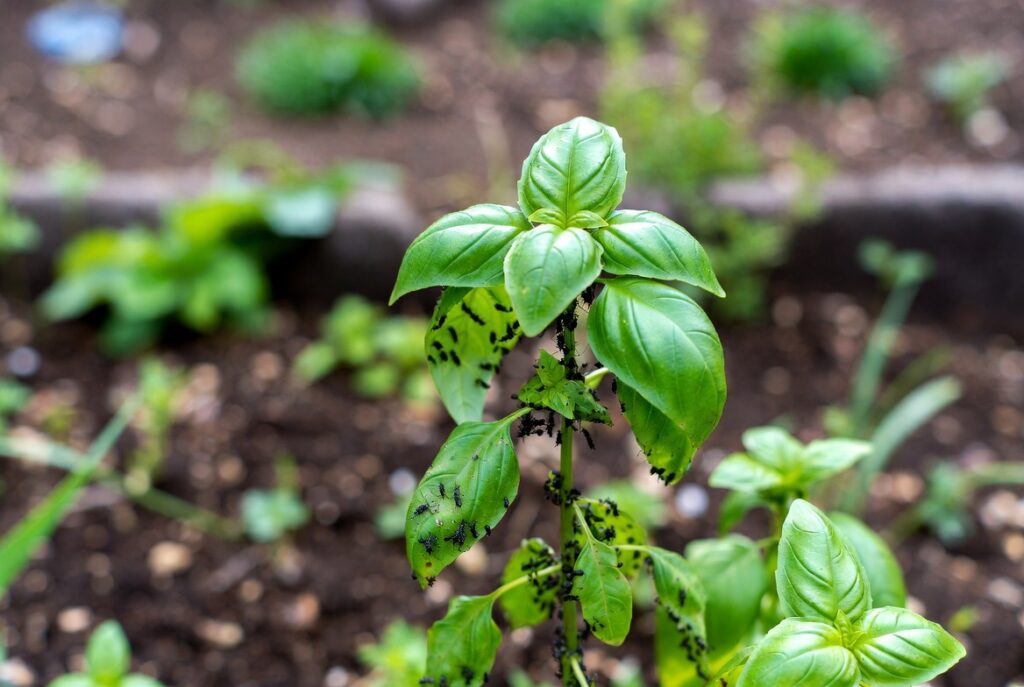
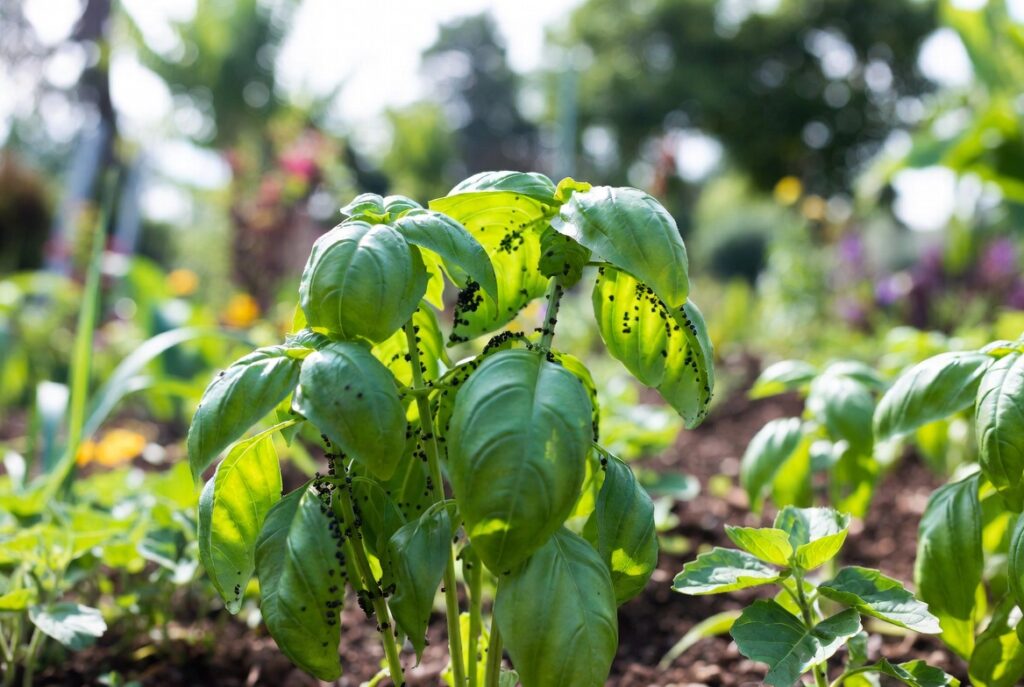
Black aphids (blackfly) are a common, soft-bodied pest on basil that cluster on tender shoot tips, under leaves, and around buds, often leaving shed white skins behind. They damage plants by sucking sap, causing stunted growth, leaf curling/distortion, and can kill young plants in heavy infestations. Aphids excrete sticky honeydew, which attracts ants (that protect the aphids) and promotes sooty mold; the mold coats leaves, blocks sunlight, reduces photosynthesis, and sharply cuts your basil’s growth and harvest.
2. The Silent Scarrers (Thrips)
Thrips are another common black basil pest. They are small, thin insects that may appear yellow, brown, or black, often described as tiny, dark slivers. Thrips are notoriously challenging because they aggregate and feed primarily deep within the most delicate, succulent new growth and plant buds.
Because they feed inside the tight buds, their damage often goes unnoticed until the new leaves expand. Thrips scrape and suck the contents of the cells, resulting in thickening and scarring of the leaf tissue. As these damaged leaves expand and mature, they become noticeably misshapen, distorted, or may even develop small holes. This habit of hiding deep within the buds makes thrips particularly resilient, as it shields them from casual sprays of water or light insecticide applications. They often require targeted application methods. Furthermore, thrips can transmit plant diseases, making their control critical for plant survival.
Physical Methods to Cure Black Pests Problem in Basil
When you first notice the black pests, your goal is immediate reduction of the population using physical methods. These cures are the quickest and safest because they require zero waiting time before you can safely harvest your basil.
1. Isolate and Clean the Area
The very first step is isolation. Immediately move the infected basil plant away from all other plants to prevent the pests from migrating. If your basil was growing indoors, a thorough cleaning of the surrounding area is strongly advised. This means scrubbing the windows, sills, walls, and countertops where the plant was located. Pests or their eggs often cling to these surfaces, and cleaning the environment prevents strays from immediately re-infesting your newly treated plant.
2. Using Water for Removal
Your most immediate and safe line of defense is a strong, directed spray of water. Take your basil plant outside or place it in a kitchen sink or shower. Use a hose or a sink sprayer to blast the bugs off the plant leaves.
When using this technique, apply moderate pressure and focus specifically on the tight crevices, buds, and the undersides of the leaves where pests congregate and hide. The physical force of the water will dislodge soft-bodied pests like aphids, and they are usually too weak or disoriented to climb back up the plant to re-establish their colony. For minor issues, this physical removal alone may be sufficient to cure the problem.
3. Manual Patrol and Pruning
If a small population remains after the water treatment, you must engage in a hands-on approach. For tiny pests, you can simply squish them with your fingers or wipe them off using a damp cloth or cotton swab. Some gardeners use a cotton swab dipped in rubbing alcohol for removing individual pests like scale, though a soap spray is generally preferred for basil. A gentle method involves using a soft paintbrush to whisk the pests off the plant and into a sink or basin.
If you identify a stem or cluster of leaves that is overwhelmingly infested, badly distorted, or heavily coated in sooty mold, the easiest solution is to simply snip off that entire portion. Be sure to discard these heavily affected plant parts in the regular garbage—not the compost pile—to ensure the pests are permanently removed from your garden ecosystem.
Essential Organic Treatment to Cure Black Pests Problem
When physical removal methods are not enough, or if the infestation is too widespread, the next reliable step is the application of food-safe, organic sprays.
1. The DIY Insecticidal Soap Solution
Insecticidal soap is a highly effective, yet gentle, solution for controlling pests because it only kills upon contact. The soap solution coats the soft-bodied insects (such as aphids, spider mites, and whiteflies), dissolving their protective waxy layer and causing them to die from dehydration.
The Crucial Soap Distinction: When dealing with edible herbs, this is the most critical rule: You must use a commercially labeled insecticidal soap concentrate or a high-quality, pure organic soap. It is vital that you never substitute this with standard liquid dishwashing detergents. Common kitchen detergents often contain harsh additives, powerful degreasers, fragrances, and bleaching agents intended for dishware, not for delicate plant tissue. These chemicals can easily cause phytotoxicity, resulting in burns or chemical damage to your tender basil leaves.
Recipe and Application Protocol: An effective, simple recipe involves mixing 1 tablespoon of pure organic soap with 2 cups of water. If you are treating a larger area, the ratio is typically 1 tablespoon of soap per quart (4 cups) of water. You may choose to enhance the formula by adding a few drops of organic essential oils like peppermint or orange oil, which can help repel pests and improve the smell.
Water quality impacts effectiveness: if your local water is hard, the minerals can reduce the efficacy of the soap solution and may lead to soap scum residue on the leaves. If hard water is an issue, consider using distilled water for your spray mix or plan to rinse the plant shortly after the soap has been applied.
Application: To prevent damage, always test the mixed solution on one or two leaves, particularly new growth, to check for plant sensitivity before spraying the whole plant. Apply the spray during the coolest hours of the day (early morning or evening), ideally when the plants are shaded, as this allows the mixture to stay wet longer, maximizing its contact time with the pests. You must spray the entire plant thoroughly, ensuring you coat the tops, stems, and especially the undersides of the leaves and any joints where the bugs are hiding. Since the solution has no lasting effect once dry, you will need to reapply the solution every 7 to 10 days until the infestation is completely gone.
2. Diatomaceous Earth (DE) as a Physical Barrier
Food-grade Diatomaceous Earth (DE), also known as fossil shell flour, is a natural, physical treatment option. This powder is made from finely pulverized, fossilized aquatic shells. To crawling insects, the powder works like sharp glass, harmless to humans but deadly to bugs by slicing their exoskeletons and causing fatal dehydration.
You can sprinkle this powder around the soil base of your basil plant. This is particularly useful for deterring ants, which act as “herders” and protectors of aphid colonies. By breaking the relationship between the ants and the aphids, you remove a major factor contributing to the severity of the infestation. You can also lightly dust the leaves with DE when they are dry, which can be useful against resistant pests like thrips.
3. Advanced Organic Power: Spinosad (For Resistant Pests)
If you are dealing with a severe infestation, especially stubborn thrips or leafminers that soap cannot conquer, Spinosad is considered the organic “heavy artillery.” Spinosad is a selective, broad-spectrum insecticide derived from the fermentation of naturally occurring soil bacteria. It is OMRI-listed for organic use and is highly effective against thrips, caterpillars (foliage-feeding worms), and leafminers. It works both by contact and as a stomach poison after the insect consumes it on the foliage.
The Essential Safety Timing: Spinosad is exceptionally safe for edible herbs and features a short 1-day pre-harvest interval (PHI) for basil. This means you only need to wait 24 hours after application before it is safe to harvest your leaves. However, this substance is highly toxic to bees and other pollinators while it is still wet. To protect beneficial insects, you must be strategic: always apply Spinosad in the late evening or at dusk. This allows the solution to completely dry overnight before beneficial insects become active the next morning. Always wear gloves and follow all label instructions during application.
Frequently Asked Questions (FAQs)
Homemade sprays are safe for basil if they are made with a pure organic soap or a commercial insecticidal soap concentrate, as these products have very low toxicity. However, you must always wash your basil thoroughly after spraying to ensure no soapy or bitter residue remains on the leaves before consumption. Crucially, avoid using common kitchen dish detergents, as their harsh chemicals and additives can easily burn or damage your basil.
Q2: My basil has black sooty spots that won’t rub off. What is th
If you see black, dusty, or moldy spots, this is most likely sooty mold. Sooty mold is a fungus that grows harmlessly on the sugary honeydew left behind by aphids. The mold itself is not parasitic, but it stops your plant from photosynthesizing efficiently. To cure it, you must first eliminate the underlying aphid infestation, and then gently wipe or rinse the leaves to remove the sticky honeydew and the black mold residue
Insecticidal soaps and water sprays work strictly on contact and have no residual effect once they dry on the leaf surface. Because pests reproduce rapidly, repeat treatments are necessary to eliminate newly hatched bugs. You should apply your solution thoroughly every 7 to 10 days until you see no further active pest infestation.
No. It is strongly advised against using Neem oil on basil. Basil has extremely delicate leaves, and Neem oil is known to cause phytotoxicity (chemical burn) on tender herbs, regardless of dilution, especially when the plant is exposed to sunlight. Furthermore, it often leaves behind an oily residue that can ruin the essential fresh flavor and fragrance of the basil you wish to eat. Always stick to insecticidal soap or Spinosad for basil pest management.
Vinegar must be used with extreme caution. If the concentration is too strong, vinegar can burn your leaves (acting like a weed killer) or cause damage when exposed to sunlight. If you use it as a pest control agent, ensure it is highly diluted, and only apply it when the plant is heavily shaded. A much safer practice is to use a 1 part vinegar to 3 parts water solution strictly as a gentle rinse after you have already harvested and washed your basil.