
If you’ve ever tried growing food in hard, compacted, or poorly draining soil, you know how quickly traditional gardening can become frustrating and physically demanding. Classic row gardens were originally designed for machinery, which leads to wasted space and soil compaction from repeated foot traffic. This makes growing healthy plants even harder for home gardeners.
Raised beds offer a smarter alternative. By elevating and containing the soil, they improve drainage, reduce compaction, and make planting and maintenance much easier. Many gardeners find they get better harvests, spend less time weeding, and enjoy gardening more overall. While building raised beds takes some initial effort, the long-term benefits are clear: healthier soil, more productive crops, and a garden that’s easier—and more enjoyable—to care for year after year.
Advantages You Will Get Using Raised Bed
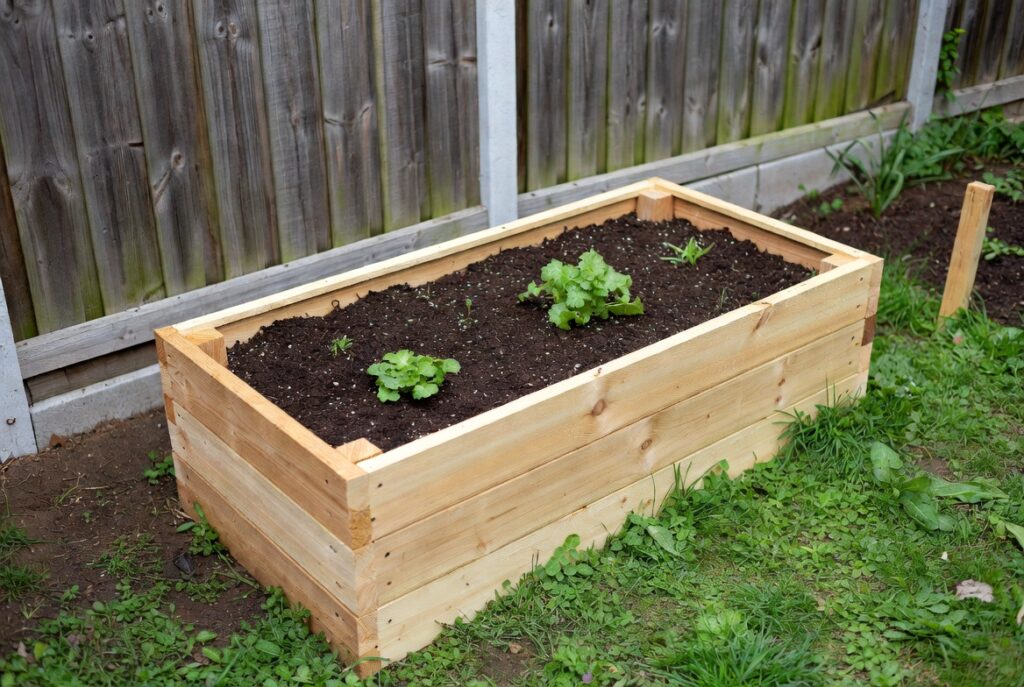
Perhaps the single most compelling reason why you should choose raised bed is the complete control you gain over the growing environment beneath your plants. This control allows you to bypass common soil problems and create an ideal foundation for plant health.
1. It will Solve the Drainage Dilemma and Compaction
If you have heavy, dense soil like clay, planting directly in the ground often results in poor drainage. When water sits and pools, it creates an anaerobic environment where roots struggle to breathe, leading to root rot and weak plants. Raised beds solve this issue by providing naturally better drainage. Because the soil mixture is elevated above the ground level and is typically mixed to be rich in porous organic matter like compost, water flows efficiently through the bed.
This controlled environment also provides a permanent solution to soil compaction. Raised beds establish permanent pathways separate from the dedicated growing area. Since the soil in the bed is never walked upon, it avoids the severe compaction that traditional in-ground gardens suffer from by the end of the season. Loose, non-compacted soil allows for more airspace, which is critical for healthy root growth and nutrient absorption. This elimination of compaction, coupled with starting with enriched soil, creates a beneficial environment: superior drainage and air space lead directly to robust roots, which translates to higher yields and reduced disease pressure in your garden. This system is notably easier to maintain long-term than trying to amend a large area of heavy, native clay soil annually.
2. Help in Building Custom, Contaminant-Free Soil
Raised beds allow you to bypass problem soils entirely, which is an increasingly important benefit in urban or newly developed areas. If your land has issues such as heavy metals, high soluble salts, or is heavily disturbed, a raised bed allows you to start fresh with a completely custom, healthy soil mix. You can start with an ideal growing medium that you choose and amend. Furthermore, amendments like compost and fertilizer are only spread on the beds, ensuring these valuable resources are not wasted on walkways or paths.
Comparing In-Ground vs. Raised Bed Soil Conditions
| Condition | Traditional In-Ground Garden | Raised Bed Garden |
|---|---|---|
| Soil Compaction | High, especially along foot traffic rows. | Very low/None, soil is never walked on. |
| Drainage | Often poor in heavy clay; can lead to root rot. | Excellent; elevated soil and custom mix prevents standing water. |
| Initial Soil Quality | Limited by native soil (e.g., contaminants, heavy metals). | Start fresh with imported, ideal, custom growing mix. |
| Soil Temperature | Slow to warm in spring. | Warms up faster, allowing earlier planting. |
3. Intensive Planting for Higher Yields
Unlike traditional row gardening, which requires wide pathways that waste valuable growing area, raised beds encourage intensive planting. This method allows you to place your crops closer together, maximizing the amount of biomass you harvest from a contained area. While the space allocated to an individual plant might be slightly less than in a row crop, the overall harvest from a given space is significantly higher because so little area is wasted on paths. This close planting also has the secondary benefit of shading the soil, which naturally helps crowd out competing weeds.
4. Help in Capturing the Season: The Thermal Advantage
Raised beds are a powerful tool for expanding your growing season. Because the soil is elevated and drains exceptionally well, it warms up faster in the early spring than the surrounding ground. This thermal advantage can accelerate the season, potentially allowing you to bring your harvest time forward by as much as four weeks. This occurs because the ground temperature in a raised bed can be 5 to 8” higher than in shallow beds, thanks to more direct solar radiation and the warmth generated by decomposing organic fill.
However, this increased warmth, while beneficial for early planting, necessitates careful water management. This higher soil temperature also increases the rate of evaporative moisture loss. Therefore, to successfully maintain the benefits of early planting and superior productivity, you must proactively plan for continuous moisture management, often making dedicated irrigation and heavy surface mulch essential to prevent the beds from drying out.
Conclusion
For any home gardener seeking maximum efficiency, superior harvests, and a more enjoyable experience, the evidence overwhelmingly supports transitioning to a raised bed system. The initial effort and investment in constructing and filling the beds pays substantial dividends for many years by reducing the ongoing labor associated with weeding, tilling, and fighting poor soil conditions.
Raised beds allow you to fundamentally redesign your gardening approach, shifting away from inefficient row crops toward a contained, human-scale system. This philosophical shift delivers measurable benefits, including total control over soil composition and drainage, maximized yields through intensive planting, and significant ergonomic relief that allows you to garden pain-free. By proactively managing the resulting challenges, particularly the need for dedicated irrigation and the importance of using safe, non-toxic building materials, you ensure your raised bed remains a highly productive and sustainable feature in your landscape, ready to deliver higher harvests year after year.
Frequently Asked Questions
The depth you choose should be based on your native soil quality. Most people select beds between 6 and 24 inches deep. If the native soil beneath the bed is healthy and clean, a 6- to 10-inch bed is sufficient because plant roots can penetrate the ground below. However, if your native soil is poor, contaminated, or extremely compacted, aim for a depth of 18 to 24 inches to ensure your plants have sufficient root space entirely within the ideal soil mix.
If you are placing the bed over compacted soil or turfgrass, you should use cardboard or landscape fabric to suppress existing weeds. More critically, if you live in an area with burrowing pests like gophers or voles, you should absolutely line the bottom of your bed with heavy gauge hardware cloth or gopher wire. This barrier is considered the only effective means of pest exclusion. If the bed is placed on soil, the barrier should be open to the ground below to allow roots to penetrate, unless you are placing the bed on concrete.
Raised bed soil naturally settles and compresses over time as the organic matter decomposes. You should plan to top off your beds with 1 to 2 inches of high-quality compost or aged manure every spring before planting. This annual amendment replaces the lost volume, keeps the soil food web healthy, and ensures continuous fertility without requiring you to replace the entire contents of the bed.